

A strong Airbnb property description helps guests decide whether a home suits their stay before they click “Book”. Professional photography and competitive pricing may attract attention, but the description adds context that images and amenity lists cannot fully provide. High-performing listings explain the experience, show the practical value of key features, set accurate expectations and make the property’s strongest selling points easy to understand. This guide looks at what effective property descriptions do differently and how owners can apply those principles to attract more relevant enquiries and support better booking decisions.
Why Your Airbnb Property Description Matters
A property description helps guests understand the parts of a stay that photos and amenity lists do not fully explain. Clear, specific information gives them a better sense of the property, sets realistic expectations and supports a more informed booking decision.
Helps Guests Understand the Property
A property description adds practical context that photos alone do not provide. Images may show a bright living room or modern kitchen, but they do not explain that the home sits on a quiet residential street, includes a dedicated workspace or lies within a five-minute walk of public transport.
These details help guests assess whether the property suits their needs before they enquire or book. Specific information also gives guests a clearer picture of the stay than broad phrases such as “beautiful home” or “perfect location.”
Builds Trust and Sets Expectations
A strong property description sets clear expectations by explaining who the property suits, what the surrounding neighbourhood is like and what guests should expect during their stay.

For example, a compact inner-city apartment may suit business travellers who prioritise convenience but offer less space for a family. A heritage home may appeal to guests looking for character while feeling less suitable to someone expecting newly renovated interiors.
Be equally clear about features that may affect the stay. If the property has stairs, limited parking, street noise, compact bedrooms or another relevant limitation, explain it before arrival rather than leaving guests to discover it themselves.
Supports Better Booking Decisions
A complete and current description contributes to the overall quality of the listing. Search performance depends on several factors, including pricing, guest reviews, response times and booking history, so owners should not treat the description as a ranking factor in isolation.
Review the description whenever you renovate a room, add an amenity, change the check-in process or introduce relevant seasonal information. Keeping these details current gives prospective guests accurate information when deciding whether the property matches their needs.
The most effective descriptions do not need to be the longest or most creative. They communicate value clearly, speak to the right audience and give guests the information they need to make an informed booking decision.
What High-Performing Airbnb Listings Do Differently
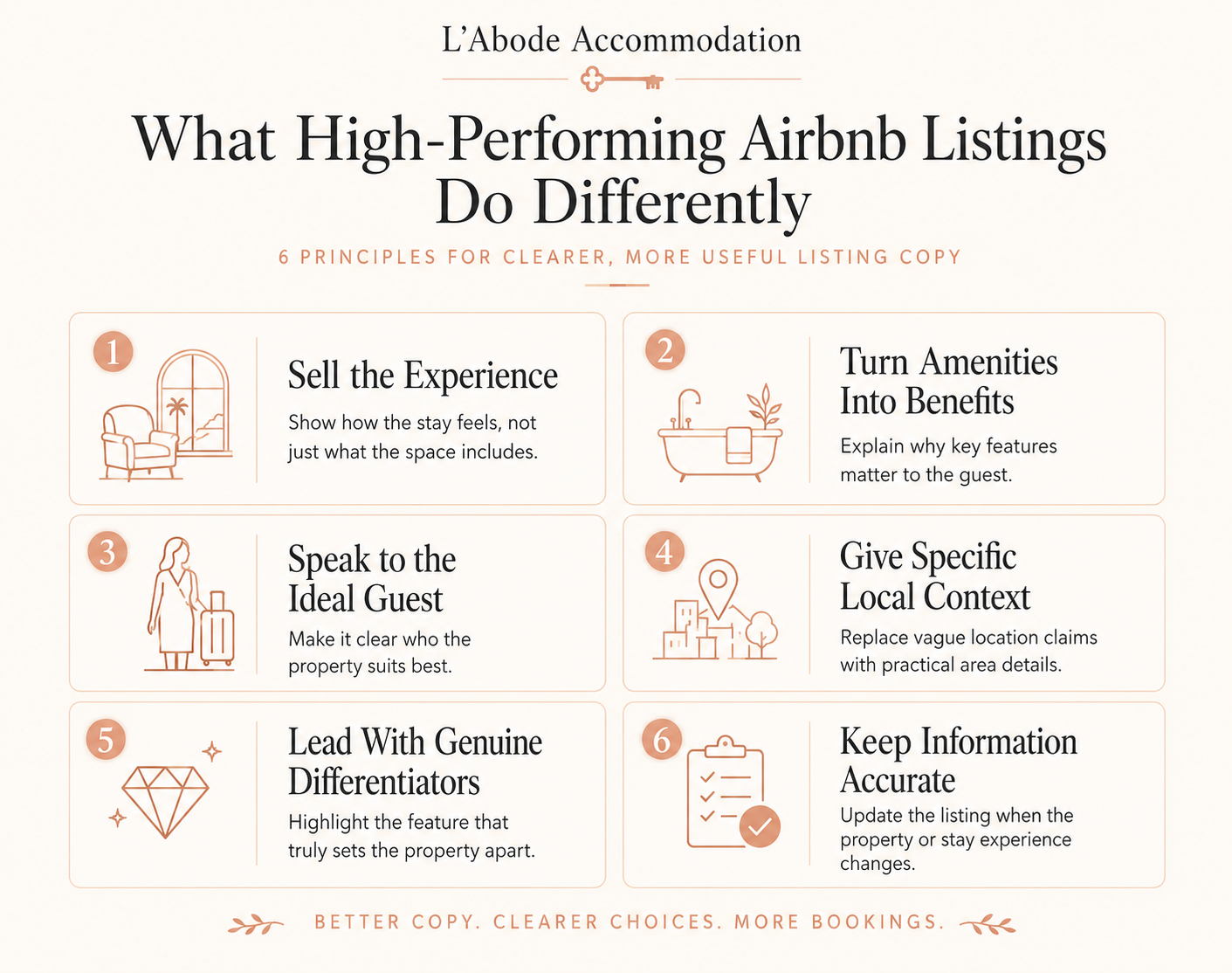
Effective listings make the description useful at every stage of the booking decision. They move beyond feature lists and generic claims by showing how the property fits a stay, who it suits, what makes the location useful, and which details set it apart from similar options.
1. Sell the Experience, Not Just the Space
- Successful property listings don’t simply describe the room – they help guests imagine staying there. Instead of listing features like “two bedrooms” or “fully equipped kitchen”, they explain how those features improve the guest experience.
- For example, rather than writing “Private balcony with outdoor seating,” a stronger description would be “Enjoy your morning coffee on a private balcony overlooking a quiet neighbourhood.” This approach creates an emotional connection while helping guests picture their stay.
- The most effective descriptions answer an important question: “What will it feel like to stay here?” Helping guests visualise the experience can make it easier for them to assess whether the property suits their stay.
2. Turn Amenities Into Guest Benefits
- Airbnb already allows hosts to list amenities separately and lets guests filter search results by specific features. Rather than repeating a long amenity list in the description, use the copy to explain why the most important features matter to the guest.
- A list of amenities tells guests what the property has, but not why those features improve the stay. For example, reliable high-speed Wi-Fi may suit remote workers or video calls, while a fully equipped kitchen can make longer stays more practical for families or business travellers.
- Adding this context makes the property more relevant to the right audience while keeping the description useful, focused and easy to read
3. Speak to the Ideal Guest
- Not every property suits every traveller, and the strongest listings do not try to appeal to everyone. Instead, they clearly identify who the property is best suited for, whether that is business travellers, families, relocating professionals, couples or guests planning an extended stay.
- Helping guests recognise that the property suits their needs makes the booking decision easier. For example, a business traveller is more likely to respond to a description that highlights a quiet workspace and convenient transport links than one filled with broad marketing language.
- Clear audience positioning also sets more accurate expectations before booking and helps property owners attract more relevant enquiries.
4. Give Specific Local Context
- Many booking platforms encourage hosts to describe not only the property itself but also the surrounding neighbourhood. Instead of using broad phrases like “great location” or “close to everything,” provide practical details that help guests understand what staying there will be like.
- For example, mention walking times to public transport, nearby cafés, parks, beaches, or business districts where relevant. If the area is known for being quiet, family-friendly, or convenient for commuters, include that information as well. These details help potential guests decide whether the location suits their plans while setting realistic expectations before they book.
5. Lead With Genuine Differentiators
- When guests compare multiple listings with similar prices and amenities, they need a clear reason to choose one property over another. Avoid generic phrases such as “beautiful home,” “perfect location” or “luxury apartment,” which do little to explain what genuinely makes the property different.
- Lead with a specific selling point instead. This could include a dedicated home office, pet-friendly outdoor space, recently renovated kitchen or interiors, private courtyard, distinctive views, or a short walk to public transport.
- Specific details make the property easier to understand and compare while giving guests a more accurate picture of what they will experience during their stay.
6. Keep Information Accurate
- Property descriptions should reflect the property’s current condition and guest experience. Whenever you renovate a room, introduce new amenities, change house rules or update the check-in process, revise the listing accordingly.
- Regular reviews also help remove outdated details before they create confusion. Accurate information gives guests a clearer basis for their booking decision and reduces the risk of disappointment after arrival.
- Treat the description as an active part of the listing rather than a one-time setup, especially when property features, access arrangements or amenities change.
Airbnb Property Description Examples: Generic vs Specific
A useful property description adds details that photos and amenity lists do not fully explain. Airbnb research involving nearly 7,000 guests found that travellers tend to prioritise a listing’s photos, description and guest reviews when deciding whether to book. The examples below show how small wording changes replace broad claims with clearer, more practical information.
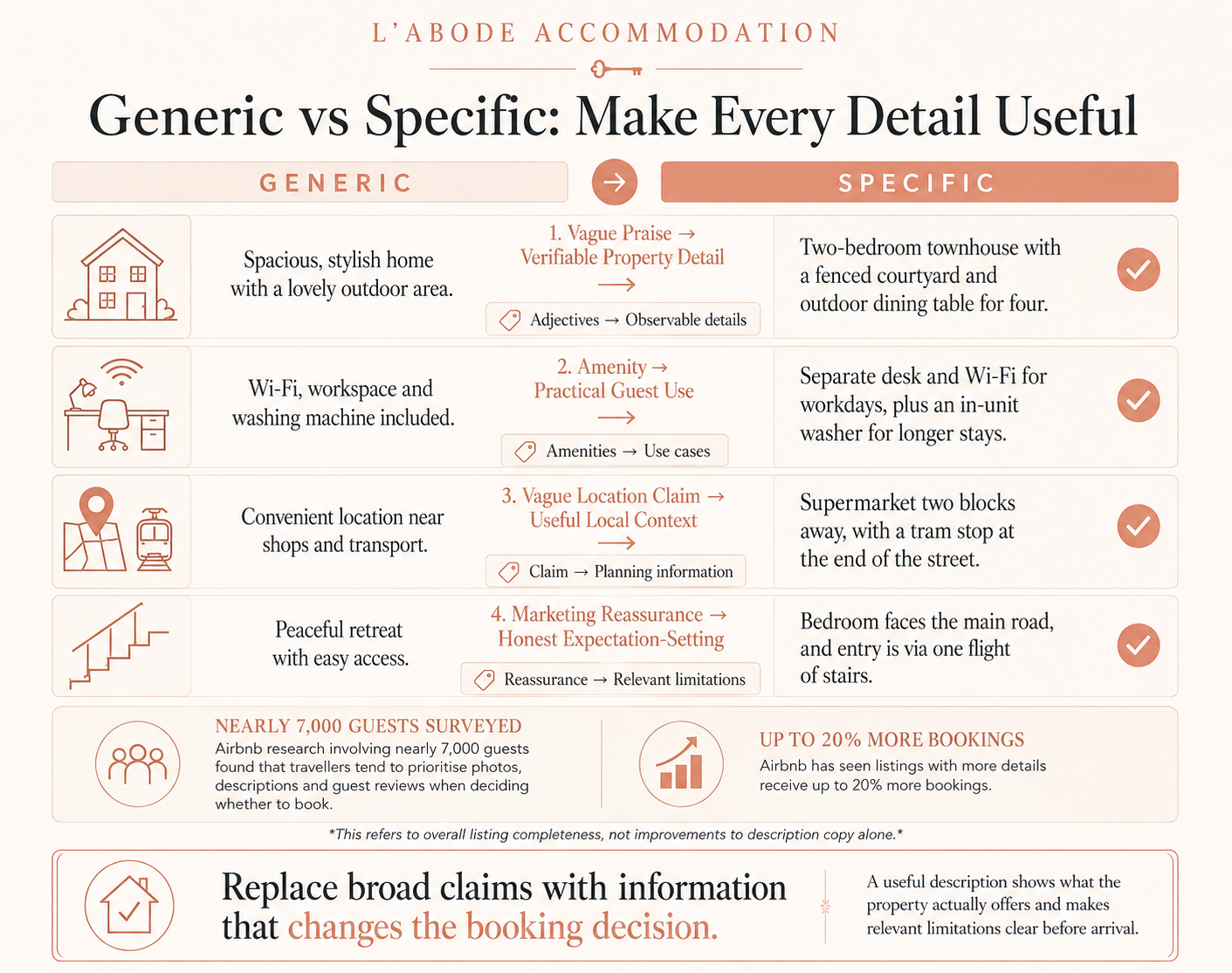
- Generic Adjective Airbnb Property Description Examples: Generic vs Specific→ Verifiable Property Detail: Replace subjective phrases such as “beautiful home with a lovely outdoor area” with observable details such as “two-bedroom townhouse with a fenced courtyard and outdoor dining table for four.”
- Amenity List → Practical Guest Use: Instead of listing Wi-Fi, a workspace and washing machine, explain how those features support workdays or longer stays.
- Vague Location Claim → Useful Local Context: Replace phrases such as “convenient location near shops and transport” with specific information, such as the distance to a supermarket or nearby tram stop.
- Marketing Reassurance → Honest Expectation-Setting: Replace broad reassurance such as “peaceful retreat with easy access” with relevant details that affect the stay, such as a road-facing bedroom or stair access.
In its 2023 Winter Release, Airbnb reported that listings with more details could receive up to 20% more bookings. This figure refers to overall listing completeness, including amenities, sleeping arrangements and other property information, rather than description copy alone.
The goal is not to make the description longer. Focus on details that help guests understand the property, evaluate how its features fit their stay and know what to expect before booking.
A Simple Checklist Before Publishing Your Property Listing

-
Start With Your Strongest Selling Point: The opening sentences should highlight what makes your property stand out. This could be its location, views, spacious layout, or suitability for a particular type of guest. Avoid generic introductions and focus on the feature that is most likely to capture attention.
-
Make It Clear Who the Property Is For: A good description helps the right guests recognise themselves. If your property is ideal for business travellers, families, couples, or longer stays, say so naturally. This helps attract more relevant enquiries and sets realistic expectations before booking.
-
Check That Every Detail Is Still Accurate: Review your description whenever the property changes. New furniture, upgraded amenities, flexible check-in options, or nearby developments should all be reflected in the listing. Keeping information current helps guests book with confidence.
-
Read It From a Guest’s Perspective: Before publishing, ask yourself a simple question: “Would this description answer the main questions I’d have before booking?” If important details about the property, neighbourhood, or guest experience are missing, consider adding them before your listing goes live.
How L’Abode Accommodation Helps Property Owners Create Listings That Stand Out
A strong property description works best when the rest of the listing supports the same message. Photography, styling, pricing, platform presentation and ongoing updates all shape how guests understand and compare a property before booking.
L’Abode Accommodation brings these areas together through its professional property management services, helping owners manage both the presentation of the listing and the day-to-day work behind it.
- Professional Listing Preparation: L’Abode Accommodation supports property assessments, interior styling recommendations, professional photography and listing copy so the property’s strongest features appear clearly and consistently across the listing.
- Listing and Marketing Optimisation: The team manages Airbnb listings and, where appropriate, distributes properties across optional platforms such as Booking.com, Vrbo and Stayz. Ongoing listing updates keep property information aligned with current amenities, presentation and guest expectations.
- Pricing and Performance Management: L’Abode Accommodation uses dynamic pricing alongside seasonality, local events, market demand and booking performance to review rates and availability over time rather than treating the listing as a one-time setup.
- Guest and Property Management: Guest screening, communication, housekeeping coordination, maintenance and inventory management form part of the wider hosting operation, allowing the listing promise and the actual guest experience to stay aligned.
Owners who want support beyond copywriting or listing setup can review L’Abode Accommodation’s wider services or explore its Airbnb property management service for ongoing listing, pricing, guest and property management.

A useful Airbnb property description gives guests the information they need to judge whether a stay suits them. Keep the copy specific, explain the value of the features that matter most, include practical local context and update the listing whenever the property changes. The aim is simple: make the property easy to understand and set clear expectations before guests book.
FAQs About Airbnb Property Descriptions
How Long Should an Airbnb Property Description Be?
Airbnb does not specify one ideal word count for every listing. The platform recommends keeping descriptions focused and using the space to explain the features and practical details guests need to understand the property. Prioritise useful information over length, and avoid long sections that make key details difficult to find.
Does an Airbnb Property Description Affect Search Ranking?
Airbnb search ranking depends on several factors rather than the property description alone. These include listing quality, price, availability, popularity and how guests interact with the listing. Airbnb also encourages hosts to describe distinctive features accurately and set clear guest expectations, so the description should support the overall quality of the listing rather than serve as a standalone ranking tactic.
What Is the Difference Between an Airbnb Title and Property Description?
The title gives guests a quick introduction to the property, while the description provides the detail behind it. Airbnb recommends leading with the most important information and trying to keep listing titles under 50 characters because longer titles may be shortened in search results. Use the description to explain the property, relevant features and what guests should expect during their stay.
What Should Go in the Property Description Instead of the Amenity List?
Use Airbnb’s amenity fields to record features such as Wi-Fi, parking and other facilities, then use the description to add context that helps guests understand the stay. Focus on distinctive property features, practical information and details that guests need when planning their visit instead of repeating every amenity already shown elsewhere on the listing.
What Happens If an Airbnb Property Description Is Inaccurate?
Airbnb requires listing information to accurately reflect the home and the features and amenities available to guests during their stay. Hosts should update the listing whenever important property details change. Keeping descriptions accurate reduces mismatched expectations and also helps hosts meet Airbnb’s listing accuracy requirements.